

2026-08-07
SARS-CoV-2: real-time images reveal an unexpectedly rapid immune response in the lungs
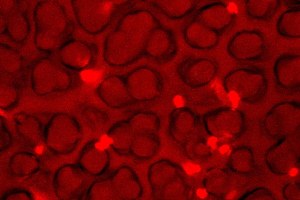
Microscopic image of the murine lung with CD8 T cells. Foto: Markus Rehberg, Helmholtz Munich
Using innovative intravital microscopy, researchers have succeeded, for the first time, in observing the early stages of the immune response live in the lungs of living mice. The findings revealed that specific T cells are activated within just a few hours of contact with components of the SARS-CoV-2 coronavirus, migrate into the lungs and accumulate there. These results suggest a previously unknown mechanism linking innate and adaptive immune defences at the very beginning of a viral infection.
For a long time, T cell activation was considered a comparatively late immune response to viral infections. While the innate immune system reacts immediately to pathogens, CD8 T cells are usually considered to be part of the adaptive immune response, which only begins to target infected cells after a few days. However, researchers at the Research Center Borstel (RCB), Leibniz Lung Center, and Helmholtz Munich have now demonstrated that these cells react to viral components much earlier than previously thought.
Intravital microscopy opens live window to the murine lung
This discovery was made possible by the use of state-of-the-art intravital microscopy. This method, which is currently only available at a few centres worldwide, enables the observation of biological processes within a living organism in real time. This allowed for tracking the movement of immune cells in the first few hours after they come into contact with viral components, and to observe the reactions that occur in the lungs of mice.
The study focused on the E-protein of SARS-CoV-2, which is a structural component of the viral envelope. Investigations showed that CD8 T cells were activated within just four hours of coming into contact with this protein. These cells then migrate specifically to the lungs, where they remain for an extended period and form clusters.
Linking of innate and adaptive immune system
The manner in which this activation occurs is particularly surprising: the researchers demonstrated that the rapid response of the CD8 T cells is not triggered via the previously known adaptive immune system pathways. Instead, the innate immune system recognises the E protein via the TLR2 receptor and triggers signals that activate the T-cells within a matter of hours. This type of activation is well understood in the context of the innate immune system.
The researchers have thus described a previously unknown mechanism through which viral structural proteins can trigger a rapid innate T-cell response. ‘Our findings suggest that the innate and adaptive immune systems work together from an early stage to coordinate defence against the virus,’ says Silke Meiners, head of the Immunology and Cell Biology research group at the RCB. ‘We know from studies involving patients with SARS-CoV-2 that early T cell activation is often associated with milder disease progression. A better understanding of these mechanisms could, therefore, open up new avenues for therapeutic strategies in the long term.’
Publication in renowned magazine
The findings were recently published in the European Respiratory Journal. This work was carried out in collaboration between the research groups led by Silke Meiners (RCB, DZL site ARCN) and Tobias Stöger and Markus Rehberg (Helmholtz Munich, CPC-M).
Sources:
- Shaalan Y, Kuruppu N, Orinska Z, Li C, Koops F, Wasnick R-M, Noessner E, Stoeger T, Meiners S, Rehberg M (2026) SARS-CoV-2 (E)-protein induces rapid TLR2-mediated T cell activation in mouse lungs revealed by intravital lung microscopy. Eur Respir J: 2501064. Link to the article
- News release of Research Center Borstel
/jbul, based on the text by RCB
Calendar
Upcoming events
2026-11-25
91st Meeting of ARCN
2026-12-16
92nd Meeting of ARCN
2027-06-08